
Semaglutide: what you should know about its use in type 2 diabetes and weight management
Let's be clear. Semaglutide has become one of those names that comes up again and again when discussing type 2 diabetes, obesity, and weight management.
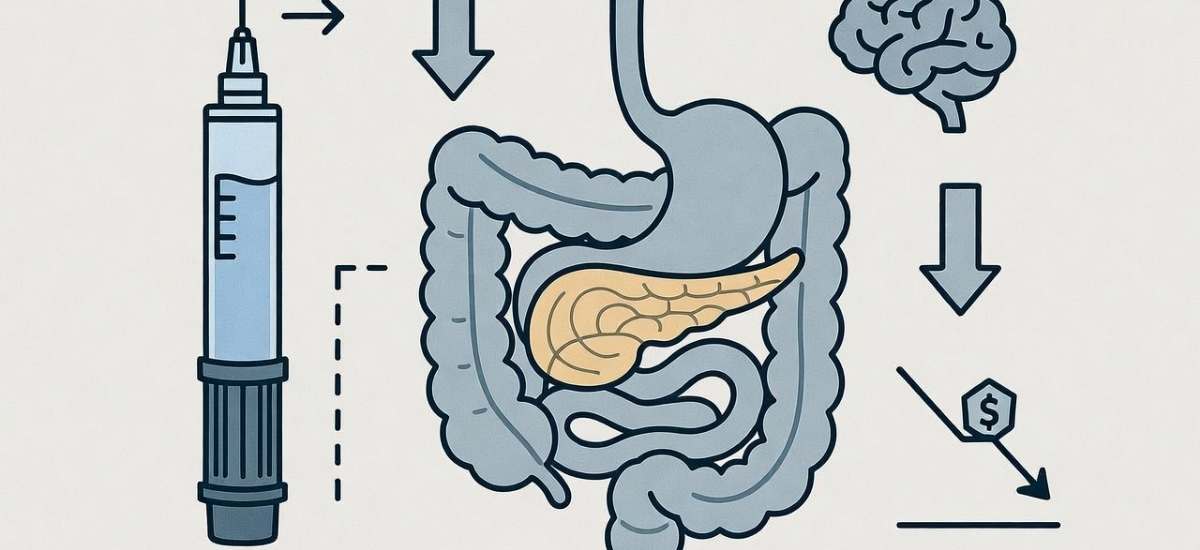
What is semaglutide and why is there so much talk about it?
Semaglutide is a GLP-1 receptor agonist medication. Simply put: it mimics the action of an intestinal hormone involved in glucose and appetite regulation. In practice, this has led to different formulations of semaglutide being used in type 2 diabetes and, in certain cases, also in weight management.
There is so much talk about it for two reasons. The first is that it has shown clinically relevant results in glycaemic control and, depending on the formulation and indication, also in weight reduction. The second is that its popularity has grown much faster than the actual understanding of the treatment.
How it works, explained in simple terms
Semaglutide does not "burn fat" or act as a magic shortcut. What it does is intervene in several body mechanisms related to glucose and satiety.
On the one hand, it helps the pancreas release more insulin in response to food. On the other hand, it reduces the secretion of glucagon, a hormone that raises blood glucose. In addition, some formulations also describe an effect on gastric emptying and, crucially, an appetite regulation: increased feeling of fullness, less hunger, and reduced intake in certain patients.
What it is actually used for and why not all presentations mean the same thing
It's worth pausing here, because this is one of the most frequent confusions.
Ozempic, Wegovy, and Rybelsus: same molecule, different indications.
In the EU, Ozempic is authorised for adults with inadequately controlled type 2 diabetes, as a treatment alongside diet and exercise. Wegovy is authorised for weight management in adults with obesity or overweight and related comorbidities, and also in adolescents from 12 years of age with obesity and over 60 kg. Rybelsus also contains semaglutide, but it is an oral formulation for adults with type 2 diabetes.
What it can contribute to diabetes and weight management
In type 2 diabetes, semaglutide can improve glycaemic control. In weight management, Wegovy showed relevant results in studies reviewed by the EMA.
This significantly changes the message. We are not dealing with a universal resource, nor a guaranteed promise, nor a treatment that should be judged solely by the amount of weight someone loses.
Limits, adverse effects, and nuances that should not be overlooked
One of the most common mistakes on this topic is to discuss benefits without adequately addressing the limitations.
The most frequent adverse effects are gastrointestinal. The EMA primarily notes nausea, vomiting, diarrhoea, constipation, and abdominal pain. The EMA has indicated that some cases of diabetic retinopathy may worsen and, in 2025, the PRAC concluded that NAION should be considered a very rare side effect of semaglutide medicines.
What to consider before thinking about this treatment
The useful question is not "does it work," simply. The useful question is different: is it indicated in your case, with what objective, with which formulation, and within what follow-up plan?
There is also a practical and current nuance worth remembering: the rise of GLP-1 agonists has been accompanied in the EU by alerts regarding illegal online sales and falsifications.
You may also be interested in reading about GLP-1 injectables and overweight and obesity.
