
Orlistat for weight management: what you should know before using it
Let's be clear. When a weight management medicine appears, it's normal for many questions to arise.
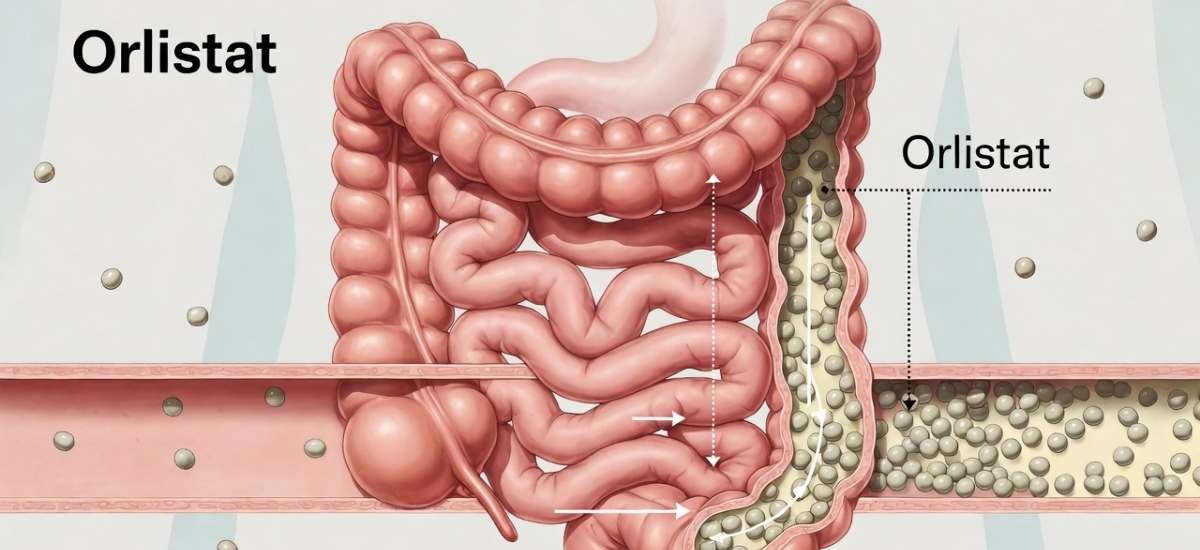
What is orlistat and what is it used for?
Orlistat is a medicine used in the management of excess weight, but it is not intended as a universal solution or a "quick fix" for weight loss. In the official data sheets, the 120 mg presentation is indicated in conjunction with a moderately calorie-restricted diet in people with obesity or with overweight and associated risk factors; the 60 mg presentation is indicated for adults with overweight, together with a calorie-restricted and low-fat diet.
How it works and what it can really contribute
Unlike other treatments that act on appetite or hormonal signals, orlistat works in the intestine. Its mechanism consists of blocking part of the action of lipases, digestive enzymes that help break down fat from food. As a result, part of that fat is not absorbed and is eliminated in the faeces.
This means that its effect largely depends on the context. It doesn't "burn fat" in the colloquial sense, nor does it by itself correct the causes of weight gain, nor does it work the same way in everyone.
When it can be considered and when it should not be used
In official documents, orlistat 120 mg is considered for people with obesity or for people with overweight when there are associated risk factors; the 60 mg presentation is aimed at adults with overweight.
It should also not be used in certain situations. Official contraindications include chronic malabsorption syndrome, cholestasis, and lactation.
What adverse effects and interactions should be considered
The most characteristic adverse effects of orlistat are digestive: fatty or oily stools, flatulence with spotting, faecal urgency, increased bowel movements, and abdominal discomfort.
Furthermore, the data sheets and patient information leaflets indicate that a high-fat diet can increase these reactions. Orlistat may interfere with ciclosporin, anticoagulants such as warfarin, levothyroxine, amiodarone, and other treatments.
What to remember before considering this treatment
If there's one idea that needs to be clear, it's this: orlistat can play a role in some cases, but it does not replace a comprehensive contextual assessment.
Another practical matter to remember is that official recommendations insist that if there is not a sufficient response after 12 weeks, the treatment should be reviewed.
You may also be interested in reading about overweight and obesity and semaglutide.
