
Adiro 100: what it is for and why it should not be seen as universal protection
Let's be straightforward. Adiro 100 is one of those medicines many people instantly link with "protecting the heart".
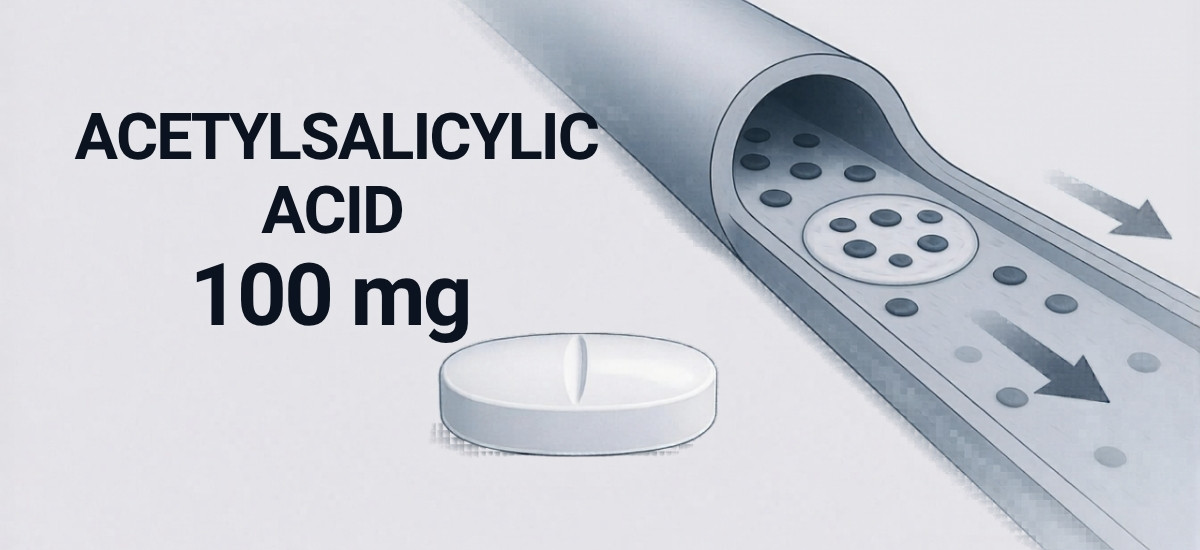
What Adiro 100 is and what it is really used for
Adiro 100 contains 100 mg of acetylsalicylic acid in gastro-resistant tablets. In its official Summary of Product Characteristics, the AEMPS (Spanish Agency for Medicines) lists it as a medicine indicated in adults for secondary prevention after a first ischaemic coronary or cerebrovascular event, such as myocardial infarction, angina, coronary angioplasty, non-haemorrhagic stroke or after coronary bypass surgery.
Put simply: it isn't used because it "looks after the heart" in the abstract, but because in certain patients it helps reduce the formation of clots that could re-block an artery.
Why the idea that it "protects" has become so widespread
The confusion doesn't come from nowhere. For years, the image of "baby aspirin" or "low-dose aspirin" became linked with cardiovascular prevention.
The problem appears when that idea is generalised. Going from "it helps some people in a very specific context" to "taking it always protects you" is precisely the leap worth avoiding.
Why it should not be seen as universal protection
Current recommendations do not support using low-dose aspirin routinely to prevent a first heart attack or first stroke in the general population. The USPSTF notes that, in adults aged 40 to 59 with a 10-year cardiovascular risk of 10% or higher, the net benefit in primary prevention is small and the decision should be individualised. In adults aged 60 or older, starting aspirin for primary prevention provides no net benefit.
So talking about "universal protection" is wrong for two reasons. The first is clinical: not all cardiovascular risk is managed in the same way. The second is practical: what may be part of an appropriate treatment in someone with a previous event may not be worthwhile in someone without one and with bleeding risk.
Primary and secondary prevention are not the same
In secondary prevention, we are talking about people who have already had a heart attack, an ischaemic stroke, an angioplasty or a similar event. There, the role of the antiplatelet agent may be well established within the medical plan.
In primary prevention, however, we are talking about preventing a first event. And there the decision changes far more depending on age, overall cardiovascular risk and bleeding risk.
Risks and precautions that should not be downplayed
The fact that it's a low dose doesn't mean it is irrelevant. The Adiro 100 SmPC warns that its antiplatelet effect can promote bleeding during and after procedures, and that treatment with acetylsalicylic acid is associated with upper gastrointestinal haemorrhage, ulceration and perforation.
In addition, the evidence reviewed by the USPSTF itself shows that even at low doses aspirin use is associated with more major gastrointestinal bleeding and more intracranial haemorrhage.
What to weigh up before starting or stopping it
The first useful question isn't "would it do me good?", but rather: Why has it been prescribed for me, or why am I thinking of taking it?
If you have already been prescribed it after a heart attack, a stroke, an angioplasty or a stent, the message is not to trivialise it or stop it on your own. If, on the other hand, we are talking about someone with no cardiovascular history who is thinking of starting it "as prevention", the sensible thing is to weigh up the full context first.
You may also be interested in reading about statins and oral anticoagulants.
