
Melatonin in Andorra: What's different from Spain and what you should know
Let's be clear. If you're coming from Spain, it's quite normal to be surprised to find references to melatonin that don't quite align with what you're used to seeing there. And that's precisely why this topic generates so many questions.
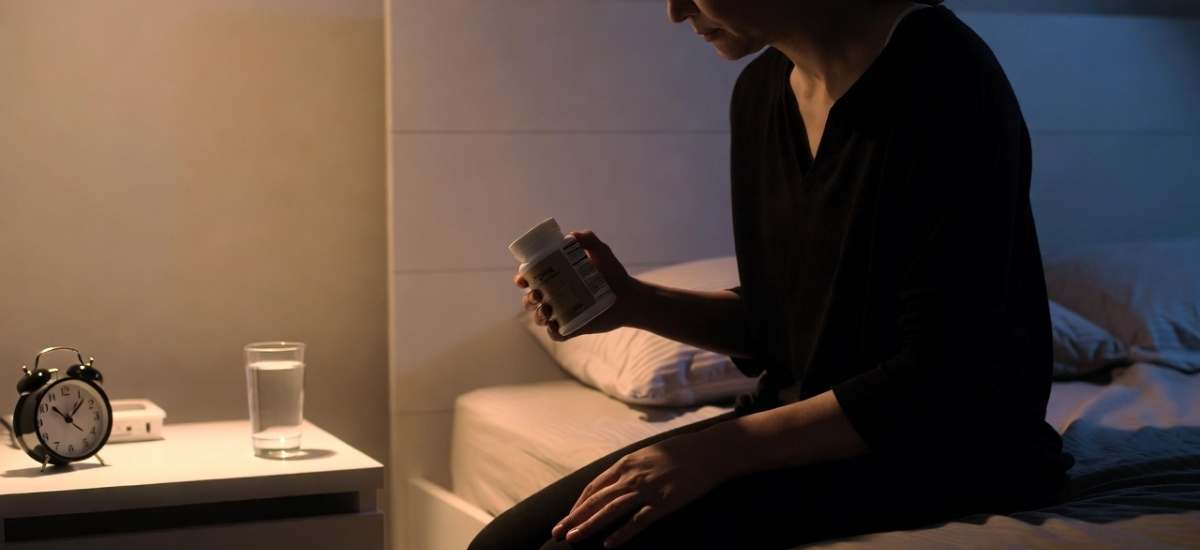
What melatonin is and why it's so widely used
Let's be clear.
If you're coming from Spain, it's quite normal to be surprised to find references to melatonin that don't quite align with what you're used to seeing there. And that's precisely why this topic generates so many questions.
Is it sold the same way in all countries? Does only the dosage matter? And what should you look at before assuming that a "non-prescription" product is automatically simple or interchangeable?
Let's sort out the issue without exaggeration and without turning it into a sales pitch.
Melatonin is a hormone involved in regulating the circadian rhythm and sleep. When we talk about melatonin products, it is important to distinguish between two levels: on the one hand, its normal physiological role in the body; on the other, its use in supplements or medicines marketed for certain sleep-related situations.
Within the European framework, there is also an authorised health claim for foods or supplements stating that melatonin can contribute to reducing the time needed to fall asleep when the product provides 1 mg per serving, taken close to bedtime.
Why Spain and other countries operate differently
Herein lies one of the key points of the issue.
In Spain, the revised public framework currently does not support the idea that melatonin supplements can be freely moved up to 1.95 mg as if that were the current and stable threshold. AESAN already communicated that food supplements with melatonin should be adapted to 1 mg per day, and in 2024 reported the withdrawal of a product with 5 mg for exceeding the maximum permitted limit and being considered a medicine.
Furthermore, in the AEMPS's CIMA database, presentations of 2 mg prolonged-release melatonin are listed as medicines, and the EMA maintains authorisation for Circadin 2 mg as a prescription treatment for short-term primary insomnia in people aged 55 or over.
What to avoid oversimplifying when talking about Andorra
This is where the competitor's text deserves the most caution.
The fact that different formulations from those common in Spain can be found in Andorra does not, in itself, authorise summarising the entire issue as "here up to 10 mg without prescription." For a health blog, that phrase is too restrictive if it is not supported by a very clear, public, and current regulatory source.
Moreover, a higher dose does not automatically equate to a better option. The NCCIH reminds us that, especially at doses higher than what the body normally produces, there is still insufficient information to have a complete picture of overall long-term safety.
What a person should consider before using melatonin
Before focusing solely on the dose, it makes more sense to review the context.
Difficulty falling asleep occasionally is not the same as persistent insomnia, frequent awakenings, a very irregular schedule, or a problem associated with other treatments or pathologies. Nor is it the same to talk about a healthy person as it is to talk about someone with epilepsy, anticoagulant treatment, pregnancy, lactation, or significant daytime sleepiness. In these cases, it is advisable to consult a healthcare professional before using it.
Common mistakes to avoid
One quite common mistake is to think that a melatoningummy will always be "decorative" or not very useful. That depends on the product, the actual dose per serving, the context, and what is expected from it.
Another mistake is to assume that if something is sold without a prescription, it no longer requires careful consideration. "Non-prescription" does not mean "without limits," "without interactions," or "suitable for everyone."
What to remember if you're looking for information about melatonin in Andorra
The important idea is not just whether a product is dispensed with or without a prescription. The important idea is how it is classified, what dosage it actually provides, what use is attributed to it, and whether it fits your specific situation.
If you are comparing Andorra with Spain, it makes sense not to be content with a quick headline. In Spain, the current public reference is more restrictive than what the competitor's text implies.
You may also be interested in reading about sleep disorders and a medicine kit for travelling to Andorra.
