
Online medicines in Andorra and the EU: what's allowed without a prescription and what not to take for granted
Let's be clear. Something curious happens with online sales: it seems like a very simple field, but it's not. Many people assume that if a medicine appears on a website, it can simply be dispensed. And it doesn't work that way.
What we're really talking about when we talk about online medicines
Let's be clear.
Something curious happens with online sales: it seems like a very simple field, but it's not. Many people assume that if a medicine appears on a website, it can simply be dispensed. And it doesn't work that way.
In health matters, the internet can bring information closer and facilitate procedures, yes. But it can also mix rules from different countries, create false senses of security, and make what seems convenient not necessarily legal or prudent.
That's why it's important to separate three things: what can be dispensed without a prescription, what can be sold online, and how to check if a website operates within a safe framework.
Not everything offered online follows the same rules.
One thing is the dispensing of non-prescription medicines. Another entirely is the online sale of prescription medicines. And another, even more delicate, is buying through websites, apps, or intermediaries that are not part of the authorised pharmaceutical circuit.
In the EU, there is no single rule for everything. The official Your Europe portal explains that non-prescription medicines that can be purchased online depend on the destination country, and that the online sale of prescription medicines is not uniformly regulated at a European level: each country can allow, limit, or not authorise it.
What the EU permits and how to verify a legal website
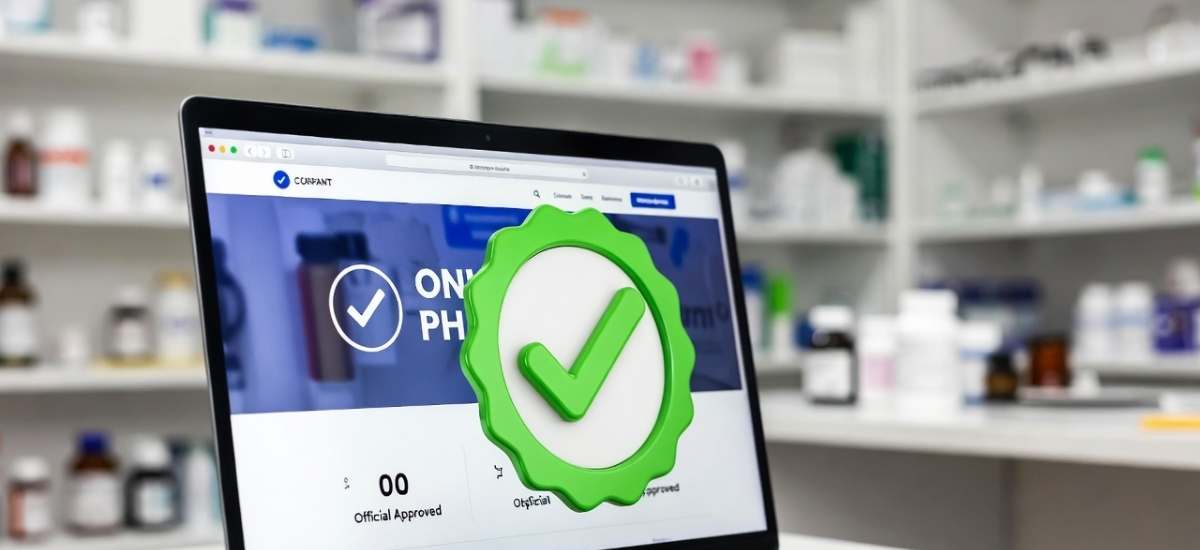
The EU does have a clear tool to detect legally operating websites within its system: the common European logo for the online sale of medicines. The European Commission explains that this logo must appear on pharmacies or retailers legally operating in the EU, that it links to the national register of the competent authority, and that it can only bear national flags from EU countries, as well as Norway, Iceland and Liechtenstein.
But that same framework makes something equally important clear: each country sets the specific conditions for supply to the public and can impose limits.
What to consider in Andorra
In Andorra, it is advisable to be even more cautious and avoid simply copying the EU scheme.
The official public sources I have located show that non-prescription dispensing can exist in specific cases. For example, the Government of Andorra announced in 2018 that emergency contraceptives with levonorgestrel and ulipristal could be dispensed without a prescription, with specific conditions for minors under 16. At the same time, the Government itself reminds in its information on antibiotics that they should not be requested at a pharmacy without a prescription and should only be taken when prescribed by a doctor.
The most frequent error: confusing "without prescription" with "without risk" or with "can be sold online"
This mental leap is very common.
A non-prescription medicine is not just any product. It can have contraindications, interactions, or usage limits. And what's more, the "non-prescription" condition does not make every website a valid channel.
European and national authorities insist on this point. EMA recommends using only registered online pharmacies and checking the common logo and national register.
What signals help distinguish a safe channel from a problematic one
There are several useful clues.
In the EU, a reliable website must display the common logo and take you to the national register of the competent authority. If clicking on it does not lead you to this register, or the pharmacy is not listed, it is advisable not to proceed.
In the Spanish case, moreover, the AEMPS reminds that orders must be placed directly with the pharmacy, without intermediaries.
The most important thing to remember
When it comes to online medicines, the useful question isn't just, "Is it prescription-only or not?" The right question is another: "Which country am I in, what exactly does its regulation allow, and how do I verify that the channel is legal?"
In the EU, the common framework mainly serves to verify legal websites and to remind that specific rules depend on the country. In Andorra, it is also advisable to avoid shortcuts and not automatically extrapolate the European system or the exceptions of other States.
You may also be interested in reading about foreign prescriptions in Andorra, travel medicine kit for Andorra and pharmaceutical confidentiality.
